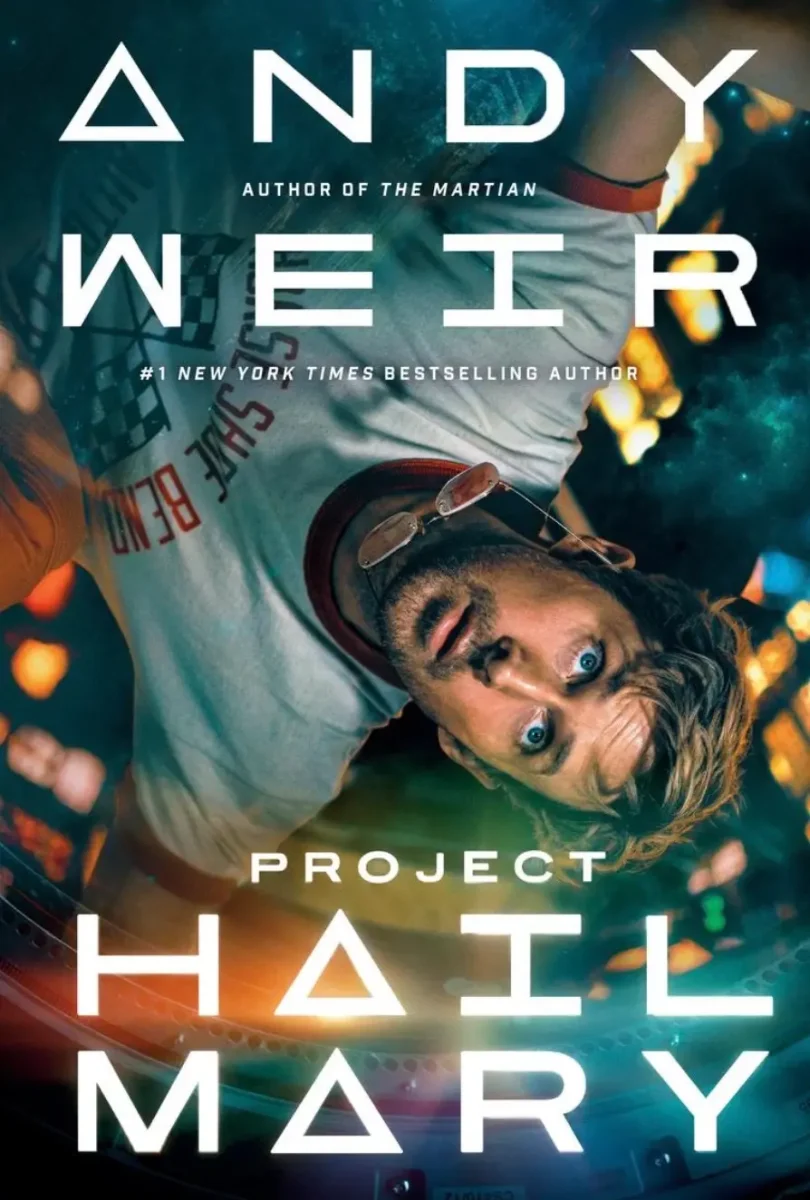
This sci-fi adventure movie, an adaptation of Andy Weir’s novel and directed by Phil Lord and Chris Miller, came out earlier this year. A massive box office hit, it exceeded $300 million worldwide in its second weekend to become Amazon MGM Studios’ highest-grossing film ever.
Taking place in the modern day, Project Hail Mary by Andy Weir is centered around a middle-school science teacher, Ryland Grace. The story takes off when Grace wakes up on a spaceship with no memory. However, as his memory slowly returns, he discovers that Earth is facing risk of extinction from Astrophage, a tiny organism that is draining the sun’s energy and causing the Earth to cool at a fatal rate. He was sent on a desperate mission (a Hail Mary attempt) to Tau Ceti, where a similar sun is in the same situation, but appears to be unaffected. During the mission, he meets an alien named Rocky, who is on a similar mission as him; together, they race against time to save their worlds.
One thing that sets this novel apart from other dystopian fictional works I’ve read is the emphasis on science. In the end, the main challenge that Grace and Rocky face is resolved by a scientific breakthrough in space. Weir pays incredible attention to keeping the biological, mechanical, and astronomical aspects of the story accurate. As a reader without nearly the amount of scientific knowledge that Grace and Rocky demonstrated throughout the novel, I found myself appreciating the logical and educational side of the plot. Few novels celebrate science this way, and Weir’s commitment to accuracy is commendable.
This 500-page novel delves into several complex themes. The first is sacrifice: Project Hail Mary explores what it means to choose humanity over oneself. Readers follow along as the authority figures on Earth are forced to grapple with impossible dilemmas and make enormous sacrifices in order to save humanity. Similar to the trolley problem and many other dystopian works of literature, this novel raises the question to readers: to what extent do the ends justify the means? High schoolers consider this moral question in small ways every day; is fitting in more important than standing up for what they believe? What is worth sacrificing in the present for their future, and vice versa? Is personal success more important than helping others? The novel pushes readers to think critically about the consequences of leadership and their choices.
Another theme the novel explores is friendship: the relationship between Grace and Rocky is the emotional center of the entire book. The two overcome language and cultural barriers in order to build trust and foster a strong friendship. Weir encourages audiences to put differences aside and recognize the value that everyone can bring. Despite their differences, the two prove that connection can emerge from unlikely friendships.. This theme is especially relevant to high school students, who are surrounded by people from all different backgrounds. In a time where division between students can be common, this novel reminds readers of the importance of open-mindedness.
The final theme developed throughout the novel is the importance of courage: Grace isn’t a fearless hero. In fact, he is terrified and selfish at times. Project Hail Mary is a realistic example of how someone might react when put under enormous pressure. Weir depicts what real courage means, showing the human side of these traditional book heroes. He explores the idea that courage is acting despite fear, not the absence of fear entirely. This is an important lesson for people of all ages to take to heart: fear itself is not the enemy of success or progress; choosing to play it safe is. For high school students, this can mean taking risks and chances in order to follow their dreams. Feeling fear is natural, but it may also be a sign that you are pushing yourself to go down the right path.
So, the verdict on Project Hail Mary?
I would definitely recommend this novel for all those who enjoy reading dystopian, sci-fi, or adventure novels. What is unique about this book in particular, and perhaps more realistic than many stories in the genre, is that Ryland Grace is not a flawless hero. He is terrified, uncertain, and even selfish at times. He demonstrates the meaning of true courage, something that readers can relate to and learn from. Additionally, Andy Weir’s accuracy in implementing scientific concepts and logical problem-solving adds an immersive layer to the story. This book is as intellectually stimulating as it is entertaining, which is why I recommend it.