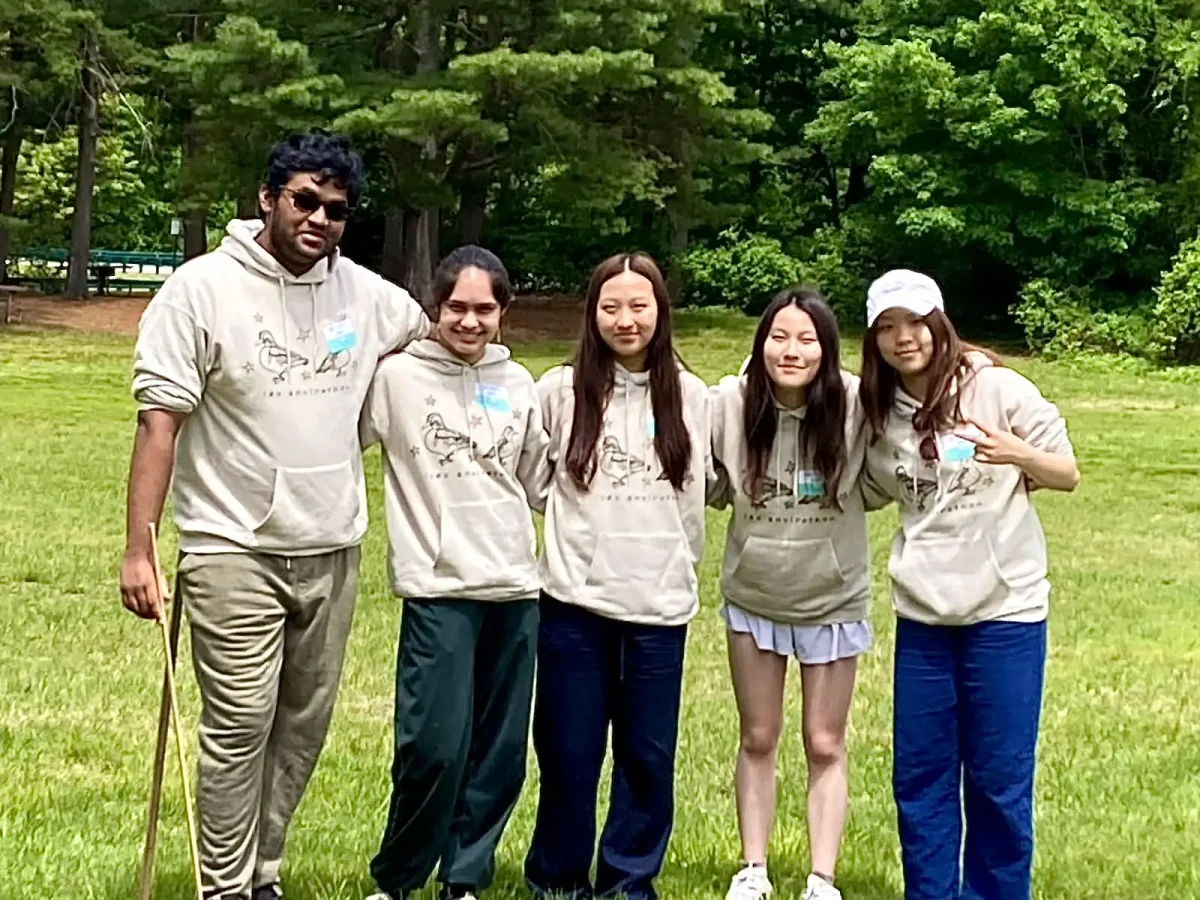
As Lexington High School prepares for its upcoming building project, a group of LHS students from the Youth STEAM Initiative have developed a chatbot designed to answer questions about the new high school.
The chatbot uses a compiled database of official public documents to address residents’ inquiries. Jerry Xu, a senior at LHS and the project’s lead, explains the different features that the chatbot has.
“People ask details about the pricing of the new school, how that will affect property taxes, the comparison to neighboring high schools … People are interested in knowing how their income will be affected. There is also questions on the educational side of things,” Xu said.
With upcoming events and votes affecting the construction of the new school, the chatbot has become a vital tool for those seeking accessible and detailed information.
“We’ve been getting a lot of traffic, especially in the community; [they] have been giving their input and using it in their discussions and their debates,” Xu said.
In the process of creating the chatbot, LHS students also collaborated with government officials and activist organizations such as Yes4Lex.
“One thing that was really surprising is how open Lexington as a community and government were to receiving help from high schoolers like us,” Xu said.
Ding Wei, the mentor of the Youth STEAM Initiative, guided the team through the process. She believes that the project has been an opportunity for high school students to connect with the community, as well as participate in a hands-on project with AI.
“[LHS’s] own students are actually helping the future of Lexington High School. So I feel this is something quite significant,” Wei said.
The team also believes that the chatbot can be applied to a broader range of uses.
“We’ve made the app very customizable in that it’s easy to change its function. I think this is the kind of app that could be used for pretty much any specific domain. It can be in government. It can be in medicine. It could be anywhere,” Xu said.
Ultimately, both students and mentors hope the project demonstrates the impact students can have on their local community.
“I think the team show how much high school students can contribute. They’re not just teenagers. They’re not only focusing on GPA or college applications. They can do much more for the community,” Wei said.